Federal Government Funds plan for new city in Melbourne North
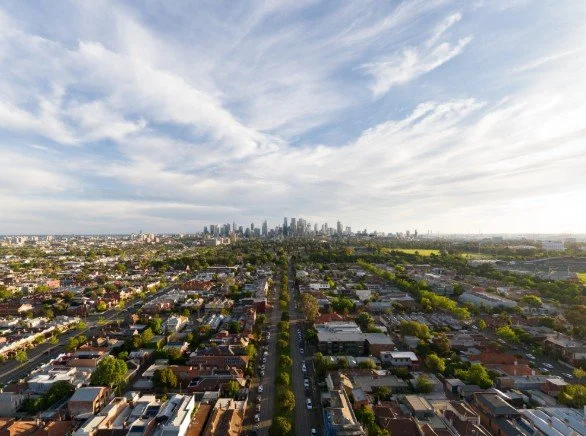
A Brand New City Is Coming to Melbourne's North — And Smart Buyers Are Already Paying Attention
By Janette Strazdins | Buyers Agent
If you've been watching Melbourne's northern growth corridor, you'll already know this region has been quietly building momentum for years. But when you layer together what's now happening at Cloverton, the Beveridge Intermodal Precinct, and the Beveridge North West housing release — the picture that emerges is not incremental growth. It's the deliberate construction of a new economic region.
As a buyers agent, my job is to cut through the noise and tell you what this actually means for buyers. So let me do exactly that.
What's Actually Been Announced?
The Federal Government, through its Urban Precincts and Partnerships Program, has committed $2.6 million to fund the planning of a proposed new metropolitan city in Melbourne's north. The project — officially called Pioneering Urban Innovation: Planning a New City in Melbourne's North — brings together Hume City Council, Mitchell Shire Council, City of Whittlesea, Stockland, and the Wurundjeri Registered Aboriginal Party.
The centrepiece is a major mixed-use activity centre on Cloverton Boulevard, designed to become the primary employment, retail, transport, and service hub for Melbourne's entire northern growth corridor.
This isn't a fringe idea. Three councils co-signed a formal Regional Partnership Agreement back in 2023 committing to collaborative planning and delivery. The Federal funding is the next concrete step toward making it a reality.
The Numbers That Should Catch Your Eye
Let's talk scale, because this is genuinely significant:
380,000 residents — the projected regional catchment this city will eventually service
50,000 jobs — the long-term employment target for the Cloverton precinct alone
11,000+ hectares — the total footprint of the Cloverton development
40km from Melbourne CBD — with Hume Freeway access and Donnybrook Train Station already operational
Cloverton is already Victoria's largest masterplanned community, and it has been earmarked as a State Government priority development zone — meaning hospitals, train stations, TAFEs, universities, and cultural facilities planned for the region are earmarked to be built here.
But Cloverton is only part of the story. Immediately to the north, something equally significant has broken ground.
The Beveridge Intermodal Precinct: Australia's Largest Freight Hub Is Being Built Right Next Door
In December 2025, the Federal Government turned the first sod on the $1.62 billion Beveridge Intermodal Precinct — now under active construction, with John Holland Group appointed to deliver Stage 1.
The numbers here are extraordinary:
1,100 hectares — the total precinct footprint, making it Australia's largest intermodal facility
8,000 direct jobs within the precinct, with over 17,000 positions supported at peak
70% of the workforce projected to be drawn from Melbourne's northern suburbs
500,000 TEU annual freight capacity upon full completion
$14 billion projected economic boost for Victoria
167,000 truck trips removed from Australian roads every year once fully operational
Stage 1 focuses on a rail terminal capable of handling double-stacked freight trains up to 1,800 metres long, targeting operations by mid-2028. The broader precinct will expand to include warehousing, industrial facilities, and a 507-hectare logistics and data centre zone. The Federal Government has also committed an additional $900 million for road upgrades, including a new interchange at Camerons Lane connecting the precinct to the Hume Freeway.
What About the Inland Rail Extension to Brisbane?
I want to be upfront about something announced this week, because buyers deserve the full picture.
On 7 May 2026, the Federal Government confirmed that Inland Rail's extension north of Parkes — toward Brisbane — will not proceed, citing a cost blowout that pushed the full project beyond $45 billion. This has attracted significant media commentary.
Here's what this means for Beveridge specifically: very little. The Beveridge Intermodal Precinct is the southern terminus of the Inland Rail corridor. From 2027, double-stacked trains will run from Beveridge through to Parkes — connecting directly to Perth, Adelaide, and the east coast freight network. That connectivity is intact and on schedule. The precinct is under construction. The job projections, economic impact, and freight capacity are all tied to the Melbourne-to-Parkes section, which is proceeding as planned.
The cut affects regional NSW and Queensland communities counting on the full Brisbane extension. For Melbourne's north, the infrastructure that always mattered locally — the intermodal hub itself — is being delivered.
A Suburb Being Built Around These Jobs: Beveridge North West
The Victorian State Government has also given the green light to Beveridge North West — a 1,279-hectare greenfields development earmarked for 15,000 new homes over the next 20 to 30 years. Stage 1 covers around 2,400 homes across 140 hectares, with future stages triggered once the federally funded Camerons Lane interchange is complete.
The development has been explicitly positioned in proximity to the Beveridge Intermodal Precinct, and is projected to generate around 3,000 additional jobs across education, retail, industry, and community services. It forms part of the State's broader greenfields strategy to deliver 180,000 new homes statewide over the coming decade.
The Beveridge North West Resilience Plan — developed with Mitchell Shire Council and RMIT University — incorporates diverse housing types, climate-resilient design, and universal accessibility. This isn't a speculative subdivision; it's a formally structured housing delivery framework aligned directly to projected employment growth.
What This Means If You're a Buyer
This is the part that matters most, and I'll be direct with you.
Government investment changes the risk profile of a location. When you see Federal, State, and three local councils all formally committed — with shovels in the ground, not just announcements — that's infrastructure lock-in. Roads, transport, schools, and civic services follow commitment. Property values follow infrastructure.
Melbourne's northern corridor has consistently delivered strong land price growth as it has matured. Suburbs like Craigieburn and Mickleham appreciated meaningfully as infrastructure caught up with population growth. Beveridge and Kalkallo are now entering that same trajectory — but this time the employment story is exponentially larger. A logistics hub projecting 8,000–17,000 local jobs, drawing 70% of its workforce from the immediate suburbs, is the kind of anchor that fundamentally changes a suburb's long-term demand profile.
For first home buyers, this region remains one of Melbourne's most accessible entry points. Median house prices in Beveridge currently sit around $645,000 — a fraction of what comparable family homes cost in inner or middle Melbourne. And you're not buying into uncertainty; you're buying into a corridor with multi-billion-dollar government infrastructure now in the ground.
For investors, the employment story is the key. Logistics and freight hubs create sustained, long-term rental demand from workers who need to live locally. When 70% of a precinct's workforce is expected to come from the surrounding northern suburbs, that's a structural demand driver. The current rental vacancy in Beveridge is still elevated as new supply outpaces the employment surge — patient investors who position ahead of that wave stand to benefit most.
For those already living in the north, the combined weight of the Cloverton Metropolitan Activity Centre, the Beveridge Intermodal Precinct, and the Beveridge North West housing release represents the most significant coordinated infrastructure and employment investment this corridor has ever received.
My Honest Take as a Buyers Agent
I work for buyers, not developers. My job is to help you make a decision that serves your financial future — not to sell you a story.
The honest picture: buying in a growth corridor at an early stage carries risk. Timelines shift. Economic conditions change. Large precincts take decades to reach full maturity. The Beveridge property market reflects this right now — median prices have softened slightly over the past 12 months, and rental vacancy remains elevated as new supply absorbs ahead of the employment wave.
But the fundamentals are being built, literally. Schools are open at Cloverton. The Kallo Town Centre is trading. Donnybrook Train Station connects to the CBD today. The Intermodal Precinct has broken ground with a major contractor mobilised on site. The Beveridge North West structure plan is gazetted. A $900 million road upgrade is committed.
These are not promises. They are facts on the ground.
When government funding is not just announced but actively deployed — contractors on site, roads being upgraded, freight terminals taking shape — the risk equation shifts meaningfully for buyers with a medium to long horizon.
What Should You Do Next?
If Melbourne's north is on your radar, now is the time to get educated — not necessarily to buy tomorrow, but to understand what the market is doing so you can move with confidence when the time is right.
Whether you're a first home buyer, an investor, or someone looking to upsize in a location with genuine long-term upside, I'd love to walk you through what this means for your specific situation.
Get in touch for an obligation-free conversation. Let's talk about what this new corridor means for you.
Janette Strazdins is an accredited buyers agent specialising in Melbourne's growth corridors. All commentary represents general market observation and does not constitute financial advice.